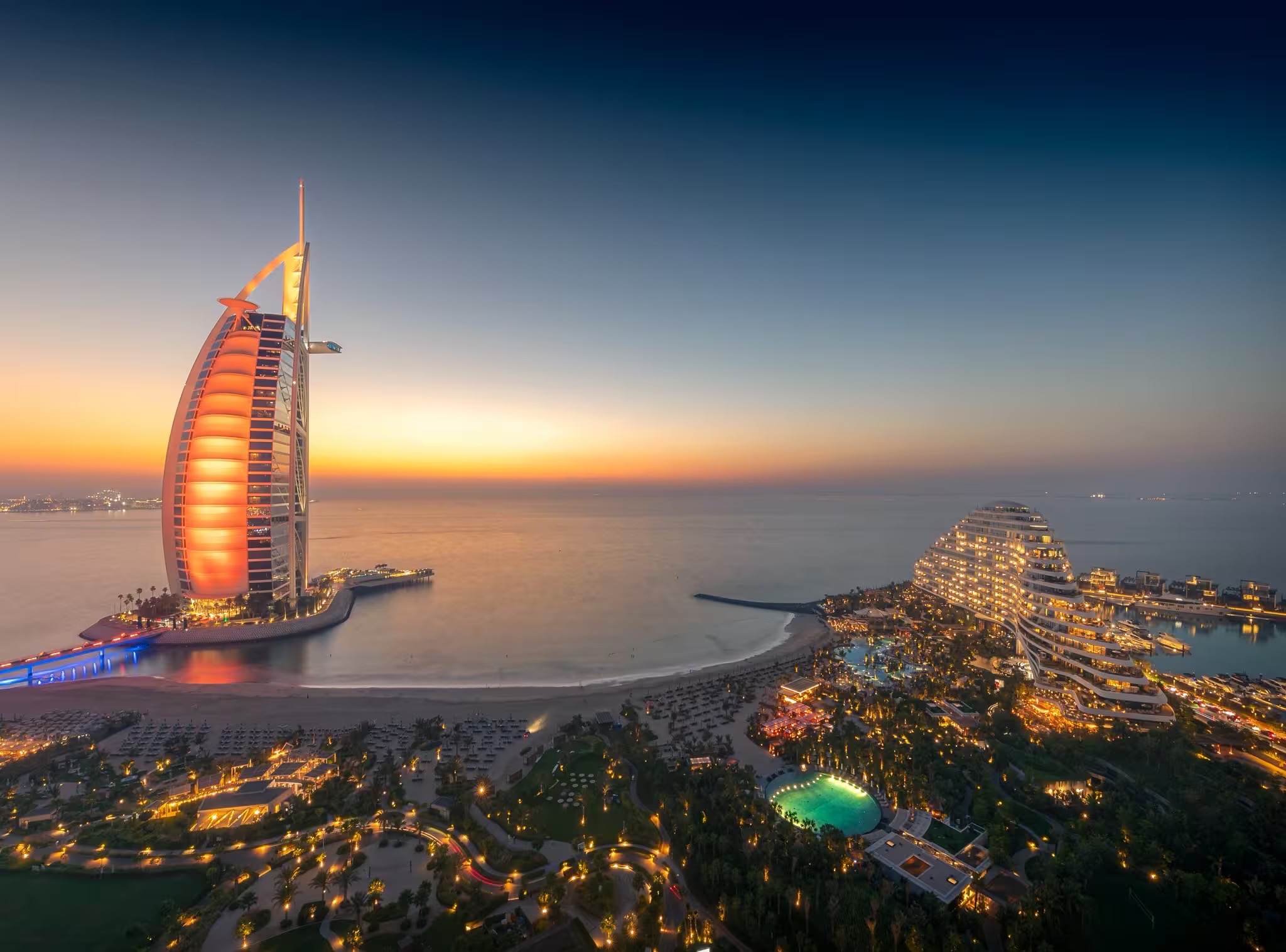
Diversification is a portfolio decision, not a verdict on the UK
Nothing here argues that British property is broken. The argument is about concentration, and about being straight on tax before anything else.
If you own UK property you already understand the mechanics. Yield, voids, leverage, cycles. None of that changes abroad. What changes is the set of forces acting on the asset.
UK property is exposed to UK interest rates, UK planning and UK demographics. That is a concentration rather than a criticism. An investor with three flats in Manchester and one in Leeds owns four positions on the same drivers.
The UAE offers a different set. A population growing faster than any British city, rents that reset annually rather than being held down by long tenancies, heavy state infrastructure spending, and developer payment structures that do not exist in Britain.
On tax, the UAE levies no personal income tax on rental income and no annual property tax on owners. Dubai applies a municipality housing fee of 5% of rental value through the DEWA bill, normally borne by the occupier.
What that does not mean is that your income becomes tax free.
If you are UK tax resident, HMRC taxes your worldwide income and gains. Rental profit is taxable at your marginal rate and gains fall within UK capital gains tax. Because the UAE charges no personal income tax, there is generally no foreign tax to credit, so the double taxation agreement does not reduce the bill in the way investors assume.
Since 6 April 2025 inheritance tax follows residence rather than domicile. UK resident for ten of the last twenty tax years makes you a long-term resident, and your worldwide assets, including UAE property, fall within the charge.
This does not make the UAE a poor place to own property. It makes it a place where returns should be modelled after UK tax. Every yield in this guide is gross and quoted before any UK liability.
What the UAE does not tax you on
- Personal income tax on rental income: none
- Annual property tax on owners: none
- Capital gains tax in the UAE: none
- Inheritance tax in the UAE: none
- Dubai municipality housing fee: 5% of rental value, normally paid by the occupier
What the UK still taxes you on
- Rental profit, at your marginal income tax rate
- Gains on sale, within UK capital gains tax
- Worldwide assets for inheritance tax, if UK resident 10 of the last 20 years
- No UAE tax paid means generally no foreign tax credit to offset
- Reporting obligations on foreign income and gains
Around 17,000 British citizens owned roughly 22,000 Dubai properties as at spring 2022. In the 2021/22 tax year, about 1,900 UK tax residents declared Dubai letting income. The gap is large, HMRC is aware of it, and it is a poor reason to be contacted by them.
This is general information, not tax advice. Your position depends on your residence, your domicile history and how the property is held. Take professional advice before investing.
People, capital, and a state that keeps building
Property demand comes down to people arriving, staying and earning. On that measure the UAE is unusual, and the numbers are counts rather than forecasts.
Dubai added more than 161,000 residents in the first seven months of 2026, taking the population past 4.74 million. Abu Dhabi reached 4.14 million in 2024, having grown by roughly half over the preceding decade.
The Central Bank of the UAE projects growth of around 5% for 2026, with non-oil activity at roughly 4.8%, driven by financial services, construction, real estate, logistics and tourism.
Tourism supports the rental market. Dubai received 19.59 million international overnight visitors in 2025, a third consecutive record, with hotel occupancy at 80.7%. Abu Dhabi reported 26.6 million visitors across all categories, counted differently and not directly comparable.
Three structural features matter to a foreign buyer. Freehold ownership in designated areas of both emirates, a ten-year renewable Golden Visa against property of AED 2 million, roughly £400,000, and no annual property tax.
Dubai population, sourced points
Millions of residentsThis is a region with genuine geopolitical exposure and 2026 demonstrated it. During the conflict with Iran, passenger traffic through Dubai airport fell 66% in March and the resident population dropped for the first time in years. The market did not unravel, and developers shifted focus from launching to completing.
That is a reasonable illustration of resilience. It is not a guarantee that the next shock resolves the same way, and exposure should be sized accordingly.
Dubai and Abu Dhabi are not interchangeable
Investors often arrive having decided to buy in the UAE without having decided where. That is a little like deciding to buy in Britain without distinguishing London from Leeds.
Start with size. Across all registered activity in 2025, Dubai recorded AED 917 billion against Abu Dhabi's AED 142 billion, roughly six and a half times larger by value. That is the most important fact about the difference between them.
Now direction. In the first quarter of 2026 Dubai's transaction value rose 31%. Abu Dhabi's rose 160.7%, from a far smaller base. A different proposition rather than a better one.
Costs differ more than buyers expect. Dubai charges 4% to the Land Department and in practice the buyer pays all of it. Abu Dhabi charges 2%, genuinely split, so the buyer pays 1%. On AED 3 million that is roughly AED 120,000 against AED 30,000, straight off your position on day one.
On income the picture reverses, then reverses again. Dubai apartments average around 7.1% gross against Abu Dhabi's 6.5%, but Abu Dhabi's stronger communities run closer to 9% because entry prices are lower.
Roughly 86 to 87% of transactions in both emirates are cash. Dubai's advantage is not finance. It is stock, resale volume and history.
Total registered transaction value, 2025
AED billions| Measure | Dubai | Abu Dhabi | Period |
|---|---|---|---|
| All transactions, value | AED 917bn | AED 142bn | FY2025 |
| Sales only, value and count | AED 682.5bn / 214,912 | AED 99.4bn / 25,604 | FY2025 |
| Transaction value growth | +31% | +160.7% | Q1 2026 |
| Transfer fee paid by the buyer | 4% | 1% of a 2% split | Current |
| Typical all-in transaction cost | 7–8% | 5–7% | Indicative |
| Average apartment gross yield | ~7.1% | ~6.5% | Apr 2026 |
| Cash transaction share | ~86% | 87% | FY2025 |
The role Dubai can play
Depth and exit. A large international buyer pool, established communities with a rental record, and the strongest probability that you sell when you decide to rather than when the market allows.
The role Abu Dhabi can play
Stage and entry price. Lower entry, materially lower transaction costs, and exposure to locations where infrastructure and institutions are still being delivered.
Liquidity is a feature you only value when you want to sell
Most property marketing is built around one question: will this rise in value? It is the wrong place to start.
A gain you cannot realise is not a return. Dubai's case rests less on growth than on depth: 214,912 sales transactions in 2025 and around 193,100 active investors, roughly 129,600 of them buying for the first time. That is the pool you sell into.
Abu Dhabi's entire secondary market in 2025 came to 7,658 resales worth AED 27.1 billion. Dubai clears that many sales in under a fortnight. If you may need capital back within a few years, that matters more than a point of yield.
Sales transactions recorded, 2025
One square equals 1,000 transactions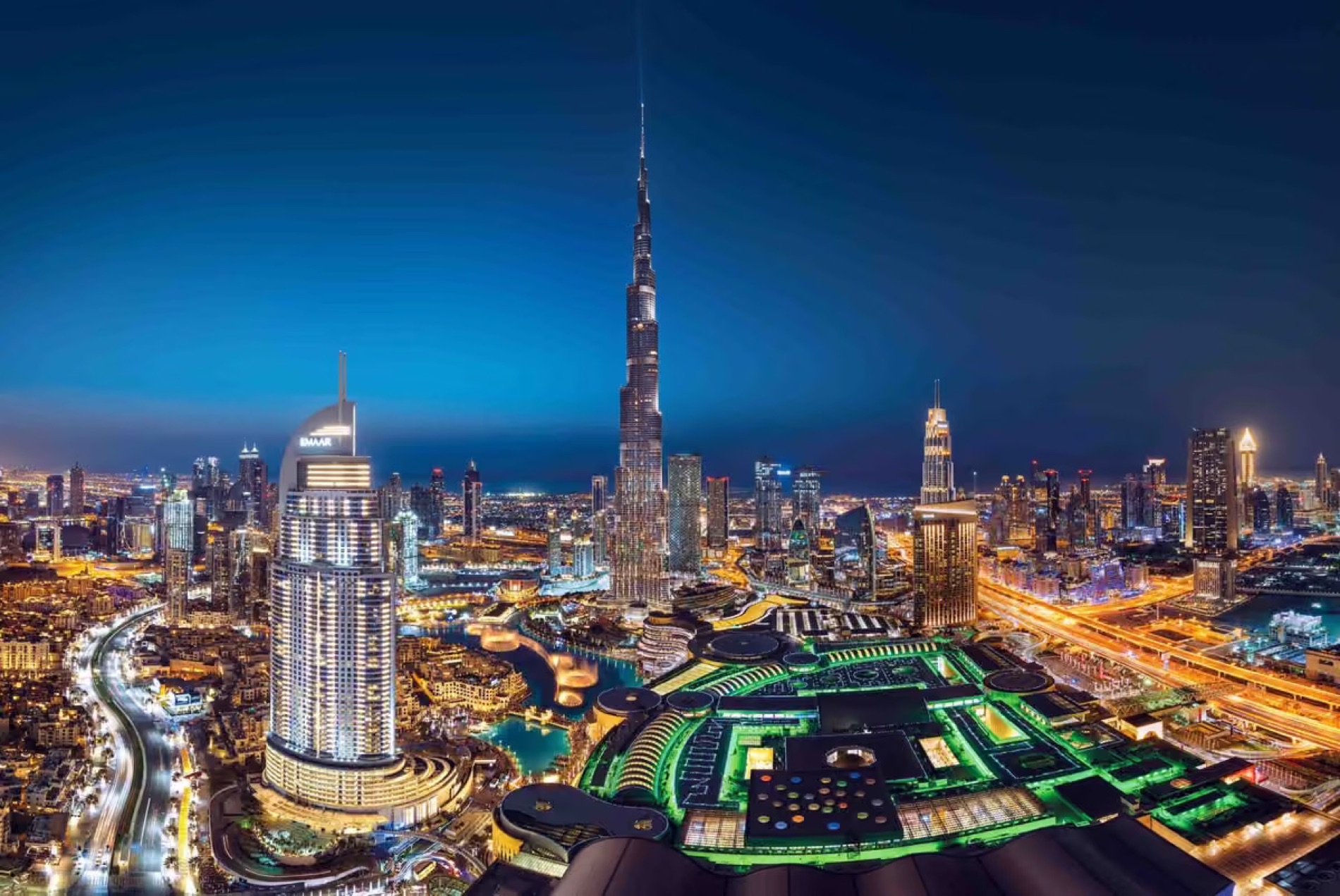
Depth comes from things that are slow to build. Master developers with a delivery record, metro lines and schools already in the ground, communities lived in long enough that buyers know what they are getting.
Dubai is still building. Developers handed over roughly 27,000 homes in the second quarter of 2026, the highest quarterly figure in five years. That is a strength and a caution at once. Completed supply supports a functioning market, and it competes with your unit when you sell.
The question is not only whether it will be worth more. It is who is likely to want it.
An earlier point in a build-out
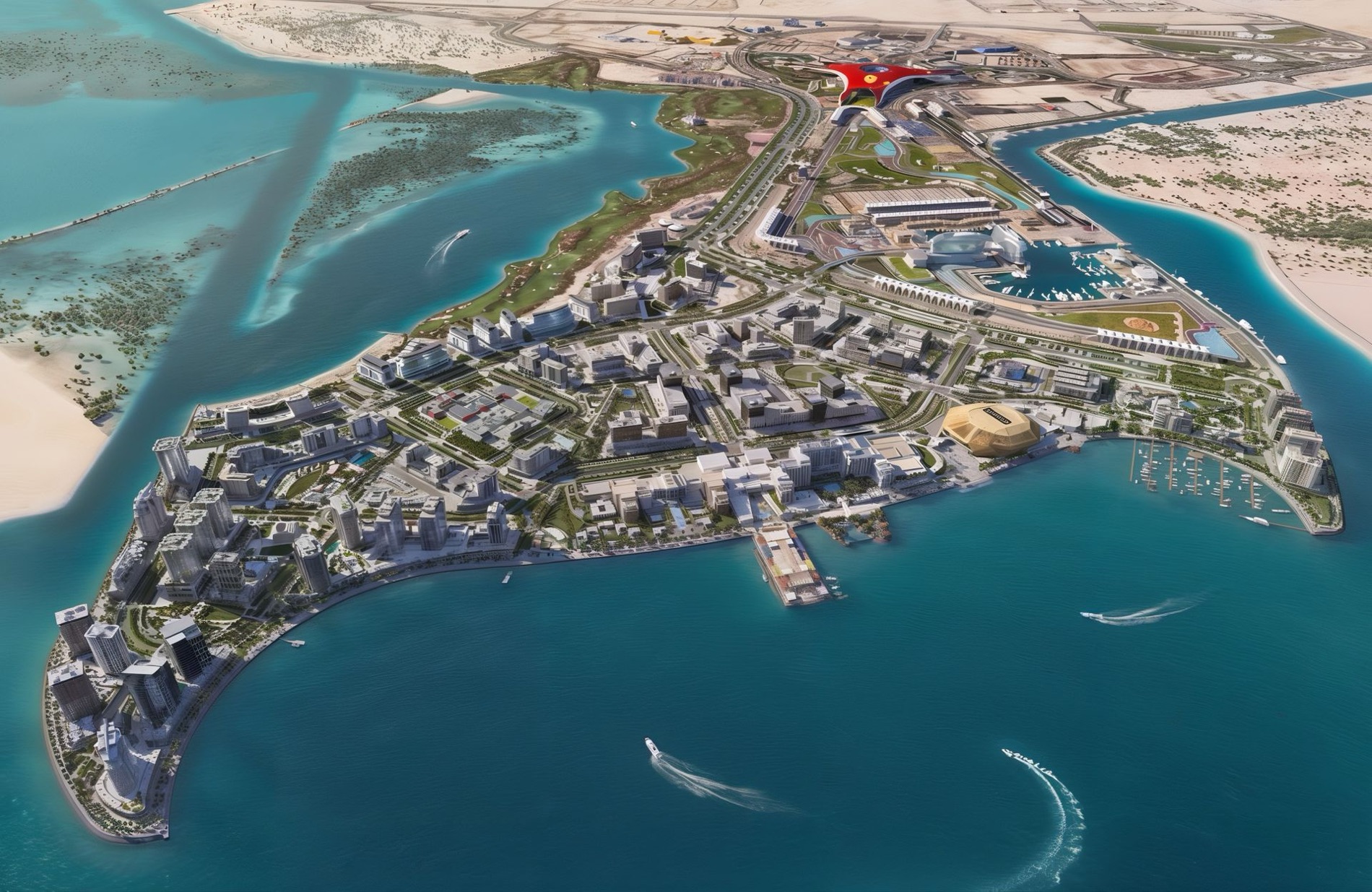
Abu Dhabi is doing now what Dubai did over a longer stretch, building the destinations, institutions and infrastructure that make people want to live somewhere, with sovereign balance sheets behind it.
The activity is measurable. Transactions reached AED 117 billion in the first half of 2026, up 112%. Foreign direct investment reached AED 13.8 billion, up 309%, exceeding the whole of 2025. Buyers came from 116 nationalities, up from 82.
Where it went matters more. Hudayriyat took AED 19 billion of residential sales value in the first half, 27% of the emirate's total, ahead of Saadiyat and well ahead of Yas. The islands that built Abu Dhabi's reputation are no longer where the largest cheques are written.
Residential sales value by island, H1 2026
AED billionsEach location is built around an anchor rather than a view. Saadiyat has the cultural district, with the Louvre open since 2017, Zayed National Museum since December 2025 and Guggenheim scheduled for December 2026. Al Maryah has the financial centre, where Mubadala and Aldar are investing more than AED 60 billion to add 450,000 square metres of Grade A offices, roughly doubling the island's supply. Hudayriyat is a sports and leisure masterplan under a single developer. Yas is entertainment, with Sphere targeting the end of 2029.
Delivery timeline by island
Delivered and scheduled milestones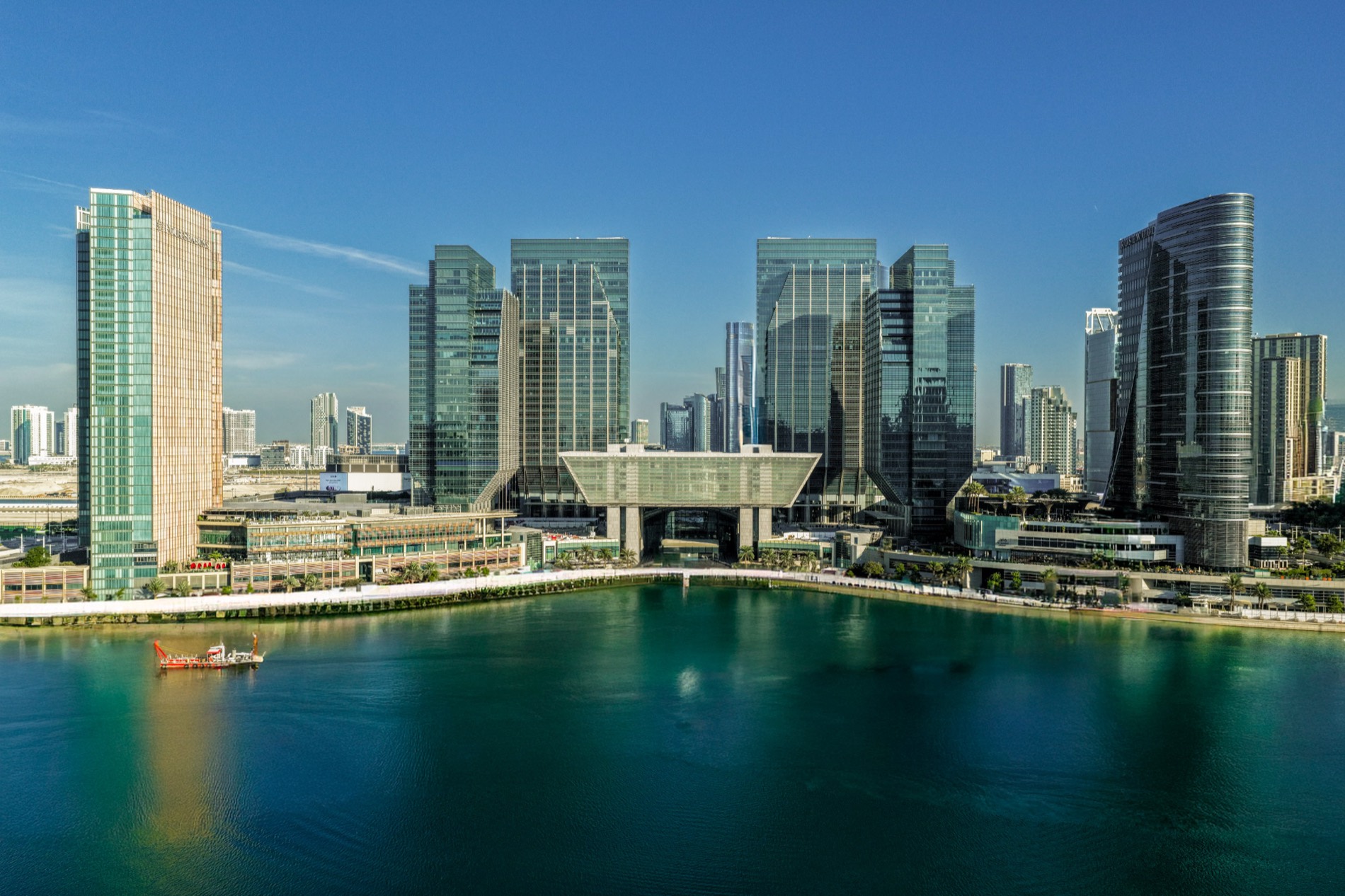
Demand shows in the tenant base. ADGM, on Al Maryah, ended 2025 with 12,671 active licences and 44,339 people working in the centre, up 51% in a year. The offices to seat them are only now being doubled.
Supply is the other half. The 2026 pipeline pointed to roughly 15,900 homes against realistic handovers nearer 8,400, around 46% below plan. Constrained delivery has supported pricing, and ValuStrat recorded values up 17.8% in the year to the first quarter of 2026.
Buying while infrastructure is still being delivered means buying before the thing that is meant to create value exists. Handovers slip, and Abu Dhabi's own 2026 delivery was tracking roughly 46% below its announced pipeline. Announced schemes change. The resale market is thin at fewer than 8,000 transactions a year.
And note the last two figures above. Values rose 17.8% while rents rose 5.9%, which means yields are compressing, not expanding. Entering early can work. It is not the same as it being safe.
What you are buying, and when you actually own it
In UK terms it sits between exchanging contracts and buying a new build off a plan, except the gap between commitment and completion is measured in years rather than months.
Buying off-plan means committing before the property is built, paying in instalments as construction progresses, and taking ownership at handover.
The step that matters most is registration, which converts a contract into a recorded interest. In Dubai the sale and purchase agreement is registered with the Land Department through Oqood, linking it to the project escrow account, and the 4% fee falls due then. On completion it converts into a title deed.
In Abu Dhabi registration runs through the Department of Municipalities and Transport with ADREC, at a 2% fee formally split. Abu Dhabi amended its real estate law in 2025, with implementing decisions issued in early 2026. The framework is newer than Dubai's, which dates to 2007.
In both emirates instalments should be paid into a project escrow account rather than to the developer. That is the most important protection in the structure, and worth confirming rather than assuming.
Opportunity identified
Unit, project and pricing assessed against comparable completed stock.
Expression of interest
A small, usually refundable amount to enter the allocation process on a launch.
Unit allocation
A specific unit, floor, layout and outlook is assigned. Much of the eventual resale performance is decided here.
Booking deposit
Typically the first tranche of the purchase price, paid into the project escrow account.
Sale and purchase agreement
The binding contract. Payment schedule, handover date, specification and default provisions all sit here.
Registration
Dubai: Oqood registration with the Land Department, 4% fee due. Abu Dhabi: registration via DMT and ADREC, 2% fee split.
Construction payments
Instalments linked to build milestones or dates, paid into escrow across the construction period.
Handover
Final balance settled, snagging completed, title issued and utilities connected.
Hold, rent or sell
The decision you should have modelled before step one, not after step eight.
Processes, fee schedules and deposit levels vary by developer and by emirate. Treat the above as the shape of the transaction and check the specifics on any project before committing.
A payment plan is a cash flow structure, not leverage
Take a property at AED 3 million, roughly £600,000, on a 20/40/40 plan.
You pay 20% of the price across the early stages, 40% during construction and 40% at handover. In cash that is AED 600,000 to secure it, then AED 1.2 million over the build and AED 1.2 million on completion.
For an investor running a UK portfolio the appeal is timing rather than magnitude. Payments are known in advance and spread across years, which can be planned around a refinance or a disposal. No lender, no affordability test, no interest, and no monthly repayment during construction.
AED 3,000,000 on a 20/40/40 plan
Obligation against cash deployedNobody is lending you anything. You are simply paying later.
With a mortgage a third party advances capital, charges interest and takes security. With a payment plan no external capital is deployed, no interest accrues, and no bank can repossess.
What has not changed is the obligation. The full AED 3 million remains contractually payable. If you cannot meet an instalment, the sale and purchase agreement governs what follows, which can include penalties or termination with a deduction from what you have already paid.
Plan shapes differ. Dubai commonly runs 60/40 through to 90/10, weighted to handover. Abu Dhabi typically runs 40/60 to 70/30, asking for more before completion. The same headline price can mean a very different cash profile.
Mortgage leverage
- A third party advances capital
- Interest accrues on the balance
- The lender takes security over the asset
- Default can mean repossession
Developer payment plan
- No external capital is advanced
- No interest accrues
- No lender security, but contractual obligations
- Default can mean penalties or termination
What £250,000, £500,000 and £1 million actually reach
The most useful question is not what the market is doing. It is what your capital reaches, and what it commits you to.
At roughly five dirhams to the pound, £250,000 is about AED 1.25 million, £500,000 is AED 2.5 million and £1 million is AED 5 million. What those sums reach depends entirely on whether you buy something finished or something being built.
Buying outright. A completed property, paid in full, with all-in transaction costs of roughly 7% in Dubai. Your capital is the ceiling. £250,000 reaches about AED 1.17 million.
Buying off-plan. On a 20/40/40 plan you pay 60% of the price across the construction period, plus the 4% registration fee at contract. If you deploy the same £250,000 that way, it covers the construction-period payments on a property of roughly AED 1.95 million, which is around 67% more property for the same money in hand.
That is the mechanic that makes off-plan attractive, and it is genuinely useful. It is also only two thirds of the sentence.
The other 40% is not a discount. It is a debt you have agreed to.
What each capital level supports off-plan
Purchase price, AED millions| Capital available | £250,000 | £500,000 | £1,000,000 |
|---|---|---|---|
| Approximate in dirhams | AED 1.25m | AED 2.5m | AED 5.0m |
| Buying outright, completed stock | ~AED 1.17m | ~AED 2.34m | ~AED 4.67m |
| Off-plan price supported to handover | ~AED 1.95m | ~AED 3.90m | ~AED 7.81m |
| Balance due at handover | AED 780k | AED 1.56m | AED 3.12m |
| That balance, in pounds | ~£156,000 | ~£312,000 | ~£625,000 |
| Golden Visa threshold, AED 2m | Just below | Comfortably above | Comfortably above |
What that opens up, broadly. Around AED 1.95 million reaches a one or two-bedroom apartment on Al Reem or Yas, or a one-bedroom on Saadiyat. Around AED 3.9 million moves you into larger apartments on Saadiyat or Yas and clears the Golden Visa threshold with room to spare. Around AED 7.8 million reaches townhouse and villa territory, where Hudayriyat townhomes start near AED 4.25 million and Ramhan villas near AED 6.4 million.
These are entry points from published pricing rather than quotes, and they move. The specific unit matters far more than the band, which is the argument of the previous pages.
The off-plan row is not what you can afford. It is what your capital covers up to handover. On the £250,000 line you would still owe AED 780,000, roughly £156,000, on completion.
If you deploy every pound into construction payments you arrive at handover with nothing left to complete with. The balance has to come from somewhere: retained capital, a UAE mortgage if you qualify as a non-resident, proceeds from a sale, or a refinance at home. Decide which before you commit, not in the final year.
One further note on the first column. At roughly AED 1.95 million you sit just under the AED 2 million Golden Visa threshold. If residency matters to you, that gap is worth structuring around deliberately rather than discovering later.
The same structure works in both directions
Almost every guide prints the first half of this page. Rather fewer print the second.
Take the same AED 3 million property. Suppose comparable units approach handover at AED 3.6 million, 20% above your price. By then you have paid 60%, AED 1.8 million.
The AED 600,000 uplift is 20% against the price but roughly 33% against cash deployed, before costs. That gearing on cash is why off-plan attracts investors, and it is real.
It is also incomplete. Realising it means finding a buyer, obtaining the developer's no objection certificate and paying transfer and agency costs. Some developers restrict resale until a set percentage is paid. If no buyer appears, you still owe AED 1.2 million.
Illustration: value moves in both directions
Hypothetical, not a forecastInvert it. At AED 2.7 million, 10% below your price, the paper loss is roughly 17% against cash deployed, and the final AED 1.2 million is still due on an asset worth less than the contract price.
A payment plan changes the timing of your cash, so it amplifies percentage returns in either direction. It does not reduce market risk or what you owe.
Which is why the work happens before you buy. Not choosing the best payment plan, but forming a view on whether the price is defensible and whether there is a buyer at the other end.
Most people assess a project. I assess a unit
Two apartments in the same tower, bought on the same day at the same price per square foot, can perform very differently on resale.
One faces the water on a high floor with a usable layout. The other faces a service podium with a bedroom nobody can fit a wardrobe into. The brochure showed you the first.
Is the price defensible? Measured per square foot against completed comparable stock, not against other launches. Launch pricing drifts upwards together, so comparing launches tells you very little.
Is the asset right? Developer record, layout efficiency, floor and aspect, and whether the specification will still feel current in four years.
Does the market support it? Infrastructure delivered against promised, competing supply in the same handover window, and genuine end-user demand rather than only investor demand.
Can you get out? Resale restrictions, a credible completion date, a likely exit buyer, and your funding plan for the handover balance. If a project fails the first question, nothing in the other three rescues it.
01 · The price
- Entry price against completed comparables
- Price per square foot, not headline price
- Payment plan shape and its cash cost
- Premium being paid for launch access
02 · The asset
- Developer delivery record and balance sheet
- Layout efficiency and usable space
- Floor, view, plot and aspect
- Unit type against what the submarket rents
03 · The market
- Infrastructure delivered versus announced
- Competing supply in the same handover window
- End-user demand, not only investor demand
- Net yield after service charges
04 · The exit
- Resale restrictions and assignment thresholds
- Credibility of the completion date
- Identified likely exit buyer
- Funding strategy for the handover balance
The ordinary mistakes, made repeatedly
None of these are exotic. They are usually made by intelligent people moving faster than they would at home.
Choosing the payment plan over the price
An attractive plan on an overpriced unit is still overpriced. The plan affects your cash flow. The price determines your return, and the only honest way to judge it is per square foot against completed comparable stock.
Not looking at future supply
Your competition at resale is whatever else completes around you at the same time. Dubai delivered roughly 27,000 homes in the second quarter of 2026 alone.
Overlooking resale restrictions
Many contracts prevent assignment until a set percentage is paid. If you plan to exit before handover, this clause alone can invalidate it.
Having no handover funding strategy
The largest payment falls at completion, often years later. Investors who have not planned for it become forced sellers exactly when the market has the most competing stock.
Buying something with no obvious future buyer
If you cannot describe who buys this from you, and why they choose it over the alternatives, you are relying on the market rather than the asset.
Modelling returns before UK tax
A gross yield in a brochure is not a net return to a UK taxpayer. See page two.
You do not necessarily have to choose
The investors who have thought about it properly tend to ask a better question than "Dubai or Abu Dhabi". They ask what each one is for.
Dubai's contribution is depth. A large international buyer pool, more than 214,000 sales in 2025, established communities with a rental record, and the best probability that you sell when you decide to. You pay for that in entry pricing and transaction costs.
Abu Dhabi's contribution is stage. Lower entry, materially lower costs, and exposure to locations still being built. You accept a thinner resale market and a newer regulatory framework in exchange.
Neither is a portfolio alone. An investor with a ten-year horizon and no income requirement may reasonably weight to Abu Dhabi. One who may need capital in three years probably should not.
The allocation depends on six things, and none of them are about the property.
If your UK portfolio is already income-producing and geared, adding an ungeared off-plan position with a large payment falling in year three is a different decision than if you are sitting on released equity looking for a home.
I work across developers, not for one of them
Zaki Mogra, UAE Real Estate Broker, Dubai and Abu Dhabi.
A broker attached to one developer can only recommend that developer's stock, and will call whatever is launching the opportunity of the moment. I work across the major developers in both emirates, which is the only way the comparison in this guide is worth anything.
My process runs in a fixed order and property comes last. Before anything is recommended we discuss the exit: how you would sell, who would buy, and what has to be true. If that does not produce a satisfactory answer, it does not proceed.
I will tell you when a launch does not stack up. Knowing which releases to ignore is the part that protects your capital.
Understand your existing exposure
What you already own, in the UK and elsewhere.
Establish capital available
How much, and how it becomes available.
Agree the horizon
Including any point at which you may need liquidity.
Define the objective
Income, growth, or a combination.
Compare across both emirates
Dubai and Abu Dhabi assessed against your brief, not against each other in the abstract.
Assess individual units
Floor, layout, aspect and price per square foot, not just the project.
Agree the exit before committing
Who buys it, when, and what has to be true.
Support through to handover
Registration, construction payments and completion.